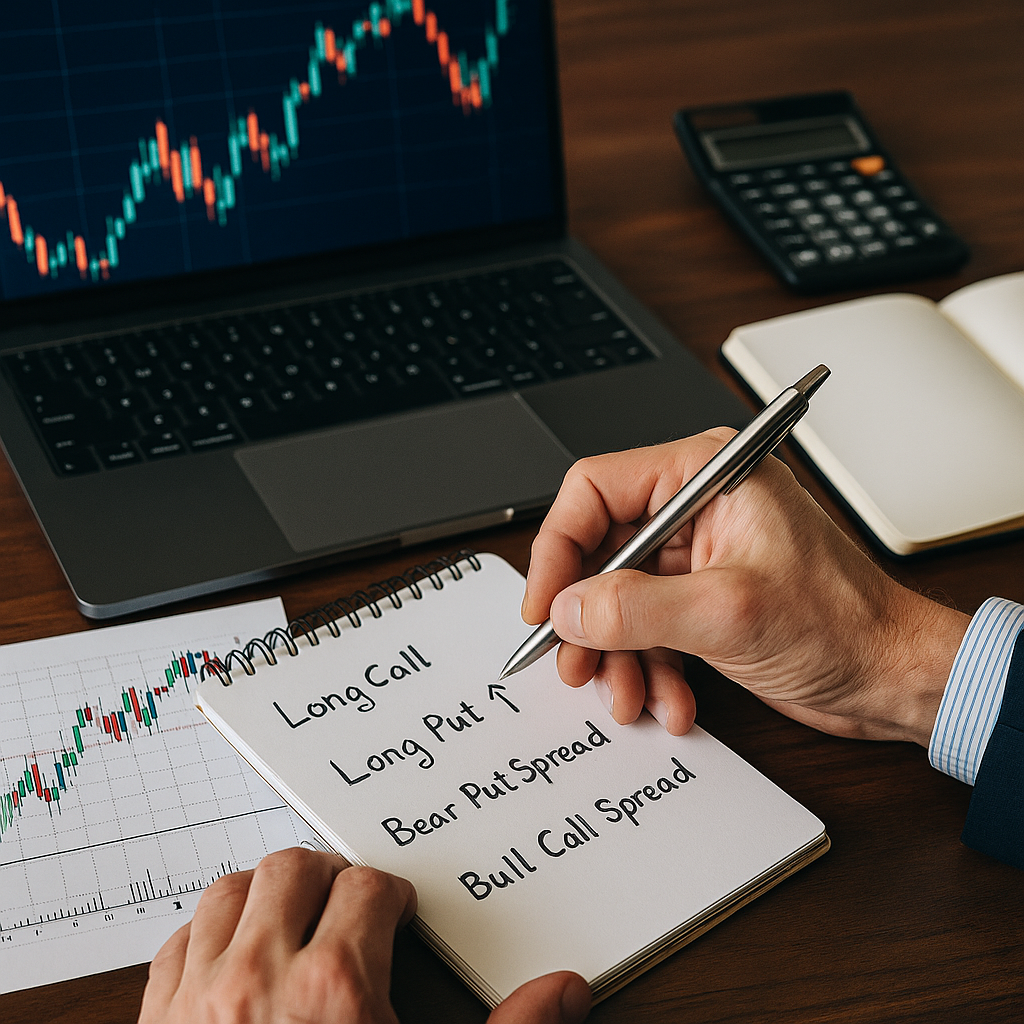
Options as Insurance: Why I Often Prefer Spreads Over Naked Positions
When I first started trading options, I was fascinated by the asymmetry: pay a premium, and suddenly I had almost unlimited upside with a fixed, limited downside. Buying a naked put felt like holding a lottery ticket against the market — if gold collapsed, I could make a fortune.
But experience has taught me that the market rarely gives you the extreme move you’re dreaming of. More often, you get a moderate correction or a sideways drift. In those cases, the naked put bleeds premium every single day.
Why I Don’t Always Stay Naked
When I bought my recent XAU/EUR 3,600 put, the logic was clear: fixed cost, potential big reward. But I also asked myself: do I really need “full insurance” all the way down to 0? The answer is often no. What I really want to capture is the next 100–200 points lower, not a total collapse.
That’s where the bear put spread comes in. By selling a lower-strike put against my long put, I reduce my upfront cost. Yes, I give up the chance of an outsized payday if gold crashes to 3,050. But I make my insurance more affordable and more efficient if the market only falls to 3,500 or 3,300.
Spreads Feel More Like Real Insurance
Think of it this way: a naked put is like insuring your house against every possible disaster — fire, flood, earthquake, you name it. The premium is huge.
A bear put spread is more like saying: I’ll insure against the common damages, but I don’t need protection if the entire house is swallowed by the earth. It’s cheaper, and it still covers the scenario I actually expect.
The Key Trade-Off
- Naked put: Unlimited potential if the market implodes, but very expensive to hold.
- Bear put spread: Lower cost, faster path to profit if the move is moderate, but capped gains.
After enough trades, I realized I’d rather collect steady, efficient returns on realistic moves than always swing for the fences. The spreads give me exactly that balance.
My Rule of Thumb
If I truly believe in a tail risk — an event that could break the market — then I’m happy to run naked puts or calls. But if I’m simply playing a probable correction or bounce, I’ll structure it as a spread. It feels more disciplined, more like real insurance, and less like buying lottery tickets.